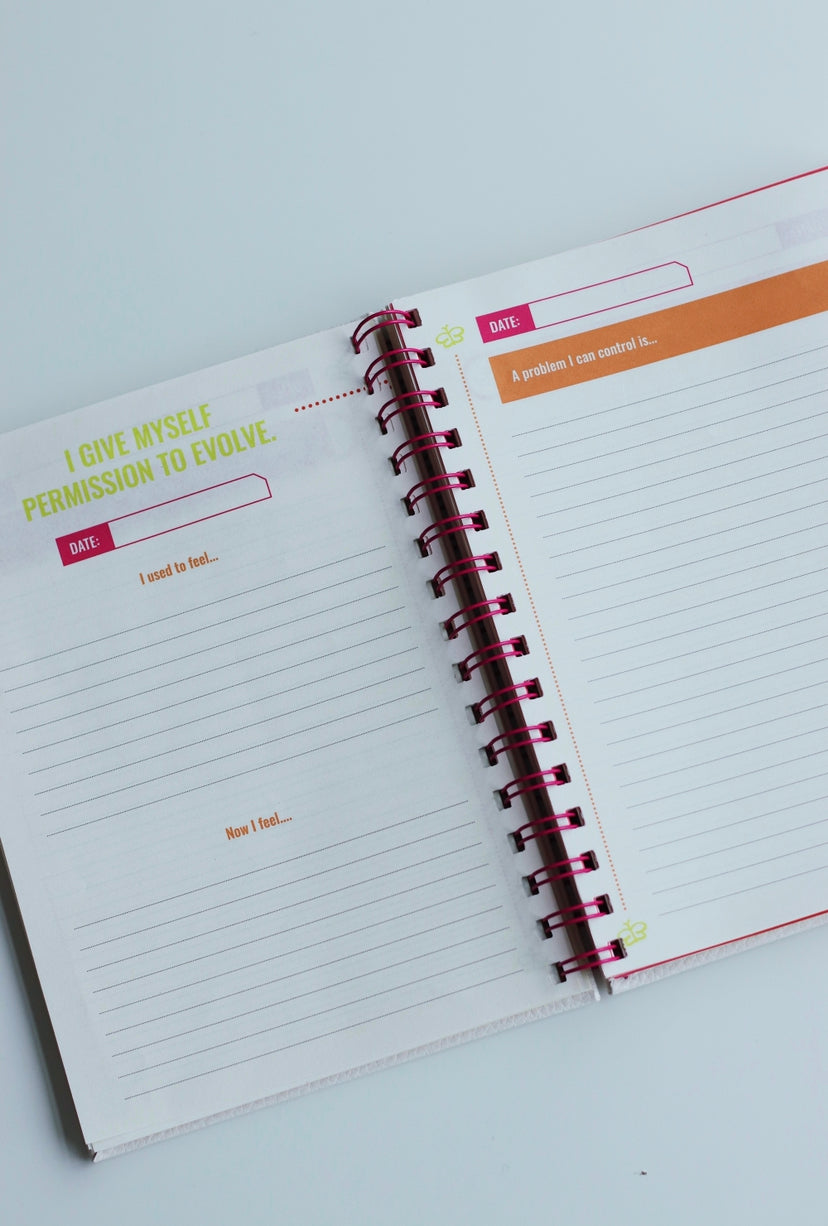
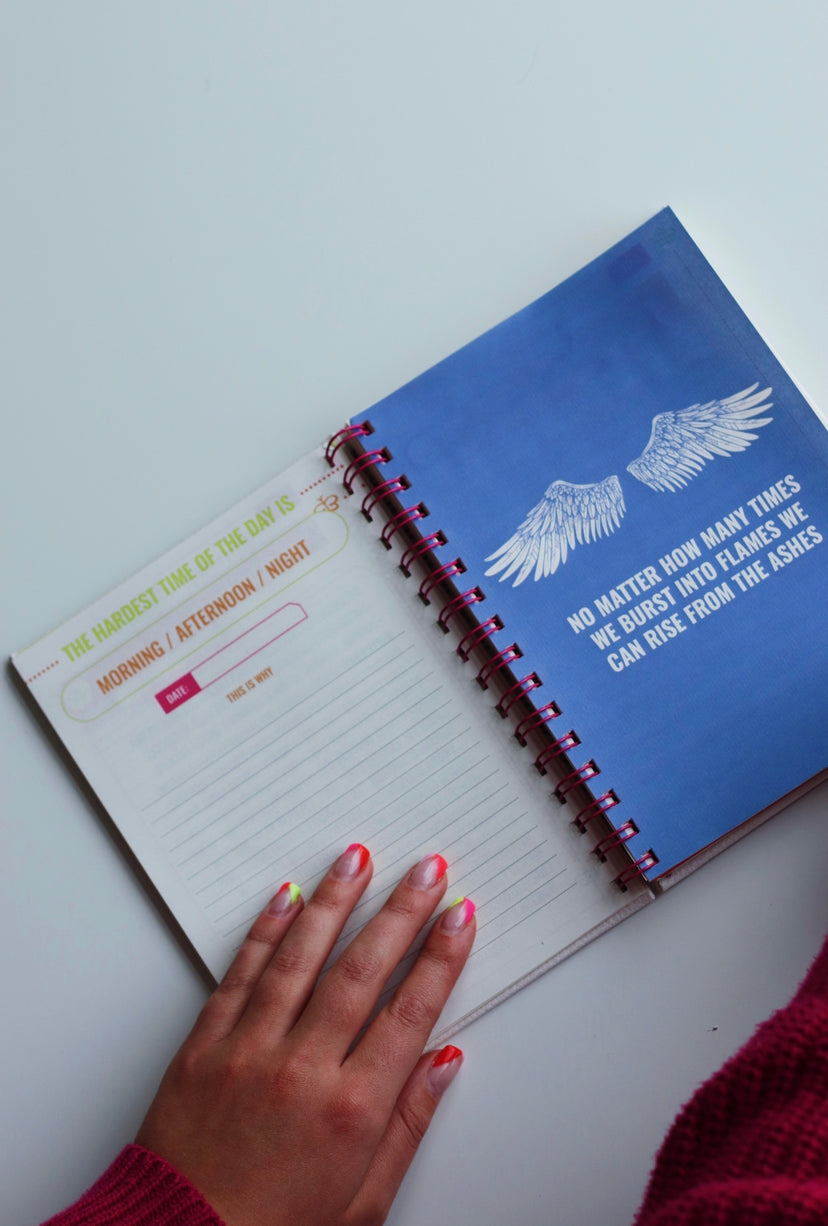
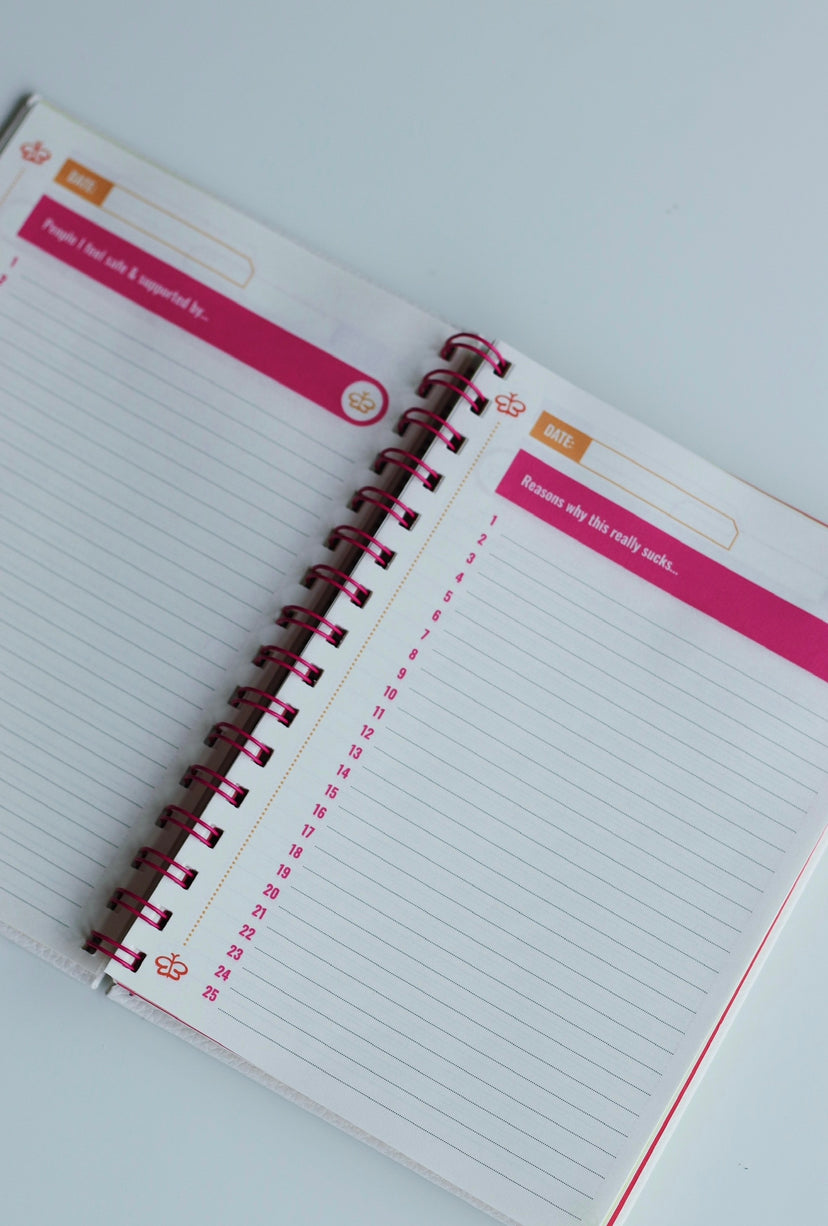
I used to feel shame about feeling anything other than happiness. It's probably part of my "nice girl" conditioning. Once I learned that feelings are just information and emotions are data our bodies are trying to share with us, everything changed.
I thought feeling angry meant I was an angry person. Now I know when anger rises, that emotion is a teacher, and I should pay attention. Emotions aren't the enemy — they're the messengers.
As humans, we are MEANT to experience a wide variety of emotions. Joy, sorrow, rage, grief, and more. Checking in with yourself and how you're feeling can help you become more self-aware… and self-awareness is HOT!
Having self-awareness and accountability (also hot) over our feelings gives us POWER. That's where emotional intelligence comes in — the ability to recognize, understand, and manage our emotions instead of letting them manage us.
What is the Feelings Wheel?
There's a tool I learned about in therapy called the feelings wheel. This is a visual aid designed by Gloria Willcox in 1982 that can help you recognize, talk about, and even CHANGE your emotions.
In her paper, she calls the feelings wheel "A Tool for Expanding Awareness of Emotions and Increasing Spontaneity and Intimacy."
Willcox said:
"In my work as a psychotherapist, I often find people 'at a loss' to describe their feelings. Yet it is the feeling vocabulary which increases the quality of communication." - Gloria Willcox, The Feeling Wheel
How can we expect to communicate with others if we lack not only self-awareness, but also the vocabulary to identify and share what we are feeling? The feelings wheel gives us that language for our emotions.
One of my favorite Brené Brown quotes that I share often when I teach journaling workshops is:
"Language is our portal to meaning-making, connection, healing, learning, and self-awareness. Having access to the right words can open up entire universes. When we don't have the language to talk about what we're experiencing, our ability to make sense of what's happening and share it with others is severely limited. Without accurate language, we struggle to get the help we need, we don't always regulate or manage our emotions and experiences in a way that allows us to move through them productively, and our self-awareness is diminished. Language shows us that naming an experience doesn't give the experience more power, it gives us the power of understanding and meaning." - Brené Brown, Atlas of the Heart
This is exactly what the feelings wheel does — it gives you the language to name your emotions so you can actually process them.
Why the Feelings Wheel Matters for Emotional Intelligence
Emotional intelligence isn't just a buzzword. It's the difference between reacting to your emotions and responding to them with intention. The feelings wheel is a practical tool that builds emotional intelligence by helping you:
-
Identify what you're actually feeling. Sometimes we say we're "fine" when we're actually anxious, overwhelmed, or disappointed. The feelings wheel helps you get specific about your emotions instead of staying surface-level.
-
Understand why you're feeling that way. Once you name the emotion using the feelings wheel, you can trace it back to what triggered it. This awareness is the foundation of emotional regulation.
-
Communicate your emotions more clearly. When you can name your emotions precisely with help from the feelings wheel, you can express them to others without shutting down or exploding.
How the Feelings Wheel Supports Emotional Regulation
Emotional regulation is the ability to manage and respond to your emotions in healthy ways. It's not about suppressing your feelings — it's about understanding them so they don't control you.
Here's how the feelings wheel helps with emotional regulation:
-
It slows you down. When you're overwhelmed by emotions, the feelings wheel forces you to pause and get curious. Instead of reacting immediately, you look at the wheel and ask: "What am I actually feeling right now?"
-
It creates distance. Naming an emotion using the feelings wheel helps you observe it instead of becoming it. You're not "an anxious person" — you're a person experiencing anxiety right now. That shift matters.
-
It gives you options. Once you've identified your emotions with the feelings wheel, you can choose how to respond. Do you need to journal? Talk to someone? Take a walk? Set a boundary? Emotional regulation becomes possible when you know what you're regulating.
3 Ways to Use the Feelings Wheel to Check In With Your Emotions
Here are three simple ways you can use the feelings wheel to gain clarity, process your emotions, and (hopefully) calm your crash out.
1. Use the feelings wheel to identify what emotions you're actually feeling.
Sometimes seeing a list of different emotions on the feelings wheel can help you pinpoint exactly what's going on inside. The feelings wheel breaks emotions down into categories — starting with core emotions in the center and expanding into more specific emotions in the outer rings.
When you're feeling "bad," the feelings wheel helps you get specific: Are you actually sad? Angry? Scared? Ashamed? Identifying your emotions with the feelings wheel helps you process them instead of staying stuck in overwhelm.
The feelings wheel shows you that emotions aren't just "good" or "bad" — they're nuanced. And naming them accurately gives you power.
2. Write down the emotions from the feelings wheel that resonate with you.
Once you've used the feelings wheel to identify your emotions, grab your journal and write them down. As you do this, let any additional thoughts, memories, or feelings surface. Don't filter. Just write.
This is what I call a "brain dump" using the feelings wheel — the most productive vent session you could ever have. You're not just venting into the void. You're using the feelings wheel to name your emotions, validate them, and move through them.
Sometimes emotions just need to be acknowledged using the feelings wheel, and then they dissipate. Other times, it takes continued healing and emotional regulation for uncomfortable emotions to go away. Either way, the feelings wheel helps you start the process.
3. If the feelings wheel isn't for you, try these journal prompts to explore your emotions.
Not everyone vibes with the feelings wheel, and that's okay. If looking at a visual tool doesn't work for you, try these free prompts instead to explore your emotions:
- What situations trigger strong emotions or judgment in me?
- When do I feel the most love, passion, and joy?
- What triggers my anger or defensiveness?
- What emotions am I avoiding right now, and why?
- How do my emotions show up in my body?
These prompts can help you access the same emotional intelligence and self-awareness that the feelings wheel offers — just through a different method.
Why Naming Your Emotions Matters
Here's the truth: you can't regulate emotions you can't name. You can't communicate feelings you don't understand. And you can't build emotional intelligence without first learning the language of your emotions.
That's where the feelings wheel comes in. It's not just a chart — it's a tool for emotional regulation, self-awareness, and healing. The feelings wheel helps you move from "I feel bad" to "I feel disappointed and a little ashamed, and now I can do something about it."
The feelings wheel gives you permission to feel the full range of human emotions without shame. It reminds you that emotions are information, not identity. And it teaches you that naming your emotions doesn't make them stronger — it makes you stronger.
Final Thoughts on the Feelings Wheel and Emotional Intelligence
Using the feelings wheel is one of the simplest ways to build emotional intelligence. It helps you identify your emotions, understand what they're telling you, and respond to them with intention instead of reaction.
Emotional intelligence isn't something you're born with — it's something you practice. And tools like the feelings wheel make that practice accessible, even on the hardest days.
So the next time you're feeling overwhelmed, stuck, or like you're about to crash out, pull up the feelings wheel. Get specific about your emotions. Write them down. Let yourself feel them. And watch how much power you reclaim when you stop avoiding your emotions and start understanding them.
The feelings wheel isn't magic. But it is a map. And when you're lost in your emotions, sometimes a map is exactly what you need!